Useful info
Take a look at more useful information before travelling abroad in your caravan or motorhome


01252 214 365
Item | Included in 365camperhire |
|---|---|
| Levelling Blocks | Included |
| Step | Included |
| Mains lead 230v | Included |
| Mains adapter lead | Included |
| Spare fuses / bulbs | Included |
| First aid box | Included |
| Insect screens | Included |
| Awning | Available for Hire |
| Groundsheet | Available for Hire |
| Chemical toilet | Included |
| Toilet fluids | Included |
| Torch / batteries | Included |
| Fresh water container(s) | Included |
| Fresh water filling hose | Included |
| Gas cylinders | 1 full bottle Included |
Bedding | |
| Duvets | Included |
| Sheets / liners | Included |
| Pillow and pillow cases | Included |
Van | |
| Portable navigation | Connect your phone to the van |
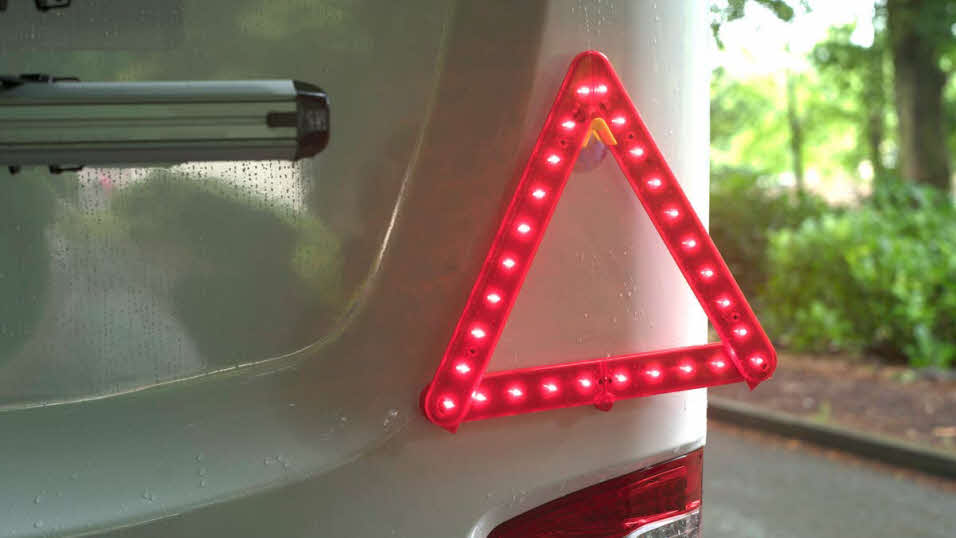
| Warning triangle | Included |
| Reflective jacket(s) | Included |
| Spare wheel / tyre | Included |
Important documents | |
| Cash / cheque books / bank and credit cards | Bring your own |
| Passport | Bring your own |
| Insurance certificate | Included |
| Maps and guides | Bring your own |
| Pens / paper / stamps | Bring your own |
| Contact telephone numbers (relatives / reporting losses) |
At 365 Camper Hire, we’re passionate about helping travelers like you experience the best of the UK, one road trip at a time. From Hampshire’s natural wonders to the UK’s most iconic landscapes, our campervans are your ticket to adventure, freedom, and unforgettable moments.
If you’re ready to explore the beauty of campervan travel, we’re here to make it simple, stress-free, and fun. Whether it’s a weekend getaway in Hampshire or an extended UK adventure, our team is ready to help you hit the road in style.
Book your campervan hire in Hampshire today and start planning the road trip of your dreams. Visit our website at 365CamperHire.co.uk to check availability and take the first step toward your next unforgettable journey. Your adventure awaits!
Driving a camper van in the EU is an adventure, however every country has its own traffic and driving regulations, it’s always best to know these as best you can before you set off.
If you are towing a car behind a motor caravan overseas, our advice would be to use a trailer with all four wheels of the car off the ground. Although most countries do not have a specific law banning A-frames, they do have a law which prohibits a motor vehicle towing another motor vehicle.
You can carry your bikes on the roof of your car provided they are attached to an adequate roof-rack and the total height does not exceed 4m.
You can also carry your bikes on the back of your vehicle, provided they do not obscure lights, indicators or number plates. If travelling through Portugal, make sure your bikes are carried at the rear of your caravan or motorhome and not your car.
Bike racks can only rest on the towbar if the maximum weight on the towbar is not exceeded.
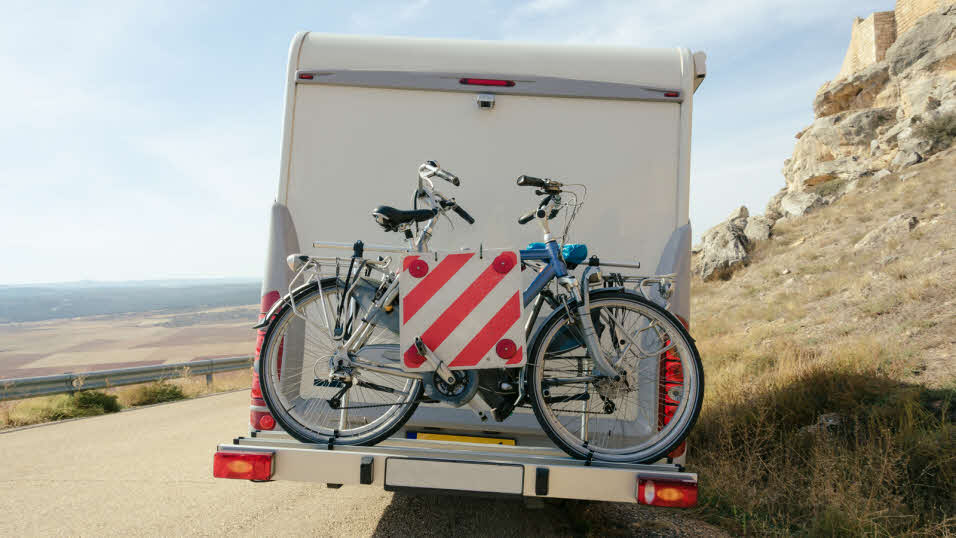
In Spain and Italy, any overhanging loads must be indicated by a square panel measuring 50cm x 50cm. The square must have reflectorized red and white diagonal stripes. Panels can be purchased from Fiamma stockists are available in aluminium and plastic. In Spain you can use either, however, in Italy the panel must be aluminium.
You need to display a UK identifier on the rear of your vehicle when travelling in Europe. If your number plate includes UK on its own or UK with the Union flag then you do not need a separate UK sticker, unless you are travelling in Spain in which case a separate UK sticker is also required. You will need a separate UK sticker displayed on the rear of your vehicle if your number plate has a Euro symbol, a national flag of England, Scotland or Wales or no flag or identifier.
If you’re travelling in Spain and your outfit exceeds 12m, you are required to fit marker boards to the back of your vehicle. You can either have two small boards or one large board but they must be placed at the back of the outfit between 50cm and 150cm off the ground.
Your marker board must:
Marker boards can be purchased from most HGV suppliers including HGV Direct.
In Italy as per Article 3 of EU Directive 96/53/CE, caravans and camper vans registered in another EU country can be used in Italy provided they do not exceed 12 m in length, 4 m in height and 2.55 m in width.
All motorhomes and caravans (not combined with towing vehicle) with a total weight exceeding 3.5 tonnes must have a sticker showing the position of the blind spots, visible on the sides and at the rear of the vehicle. These regulations are in force since 1 January 2021.
The stickers:
To view the stickers and more information, please visit https://www.securite-routiere.gouv.fr
Note: There are no specific blind spot stickers for motorhomes or caravans so you can use either of the stickers listed on the link above. There is no official distribution point for the stickers at present, but these can be purchased online at most big retailers (Amazon, ebay etc.).
In nearly all European countries it is illegal to use car navigation systems which actively search for mobile speed cameras or interfere with police equipment (laser on radar detection). Car navigation systems which give a warning of fixed speed camera locations are legal in most countries with the exception of France, Germany and Switzerland where this function must be deactivated.
In some EU countries there are restrictions on dash cam usage and you may receive a hefty fine if you get caught using one.
In both Austria and Portugal it is illegal to own and to use a dash cam. Fines can be as much as €25,000 if you are caught using one. It is also illegal to use one in Luxembourg.
In Belgium, France, Germany, Norway and Switzerland they are legal but there are strict conditions for their use. Please check before you travel.
It is legal to own and use a dash cam without restriction in the following countries: Denmark, Italy, the Netherlands, Spain and Sweden.
Adapt your headlights so that you ‘do not dazzle oncoming traffic’ by manually adjusting your lights or by using headlight converters. Eurolites are available from most motor accessory shops or on-line at www.travelspot.co.uk. These headlight converters come with a list of over 600 different vehicle types, with corresponding diagrams showing you how to position them. Eurolites are suitable for clear lens, projector and xenon headlights.
In certain countries it is compulsory to use your headlights at all times. Check the table below.
Fire extinguishers are not compulsory but are recommended in the Netherlands, Denmark, Norway and Sweden.
Please see this handy table with information for each country, showing where the equipment is compulsory or recommended (Rec)
| Country | First aid kit | High visibility vest | Warning triangle | Daytime lights |
|---|---|---|---|---|
| Austria | Yes | Yes | Yes | Rec |
| Belgium | Rec | Yes | Yes | Rec |
| Croatia | Yes | Yes | Yes (2 if towing) | Yes (during winter months) |
| Czech Republic | Yes | Yes | Yes | Yes |
| Denmark | Rec | Rec | Yes | Yes |
| France | Rec | Yes | Yes | Rec |
| Germany | Rec | Rec | Rec | Rec |
| Hungary | Yes | Yes | Yes | Yes |
| Ireland | Rec | Rec | Rec | Rec |
| Italy | Rec | Yes | Yes | Yes |
| Luxembourg | Rec | Yes | Yes | Rec |
| Netherlands | Rec | Rec | Rec | Rec |
| Norway | Rec | Rec | Yes | Yes |
| Portugal | Rec | Rec | Yes | Rec |
| Slovenia | Rec | Yes | Yes (2 if towing) | Yes |
| Spain* | Rec | Yes | Yes (2 if towing)* | Rec |
| Sweden | Rec | Rec | Rec | Yes |
| Switzerland | Rec | Rec | Yes | Yes |
* From 1st July 2023 until 1st January 2026, when the V16 emergency light will be mandatory, the drivers are free to use the V16 luminous device or the emergency triangles on motorways although the traditional warning triangles will still be mandatory on conventional roads for the time being. The use of the triangles will be prohibited on 1st January 2026.
Take a look at more useful information before travelling abroad in your caravan or motorhome
At 365 Camper Hire, we’re passionate about helping travellers like you experience the best of the UK, one road trip at a time. From Hampshire’s natural wonders to the UK’s most iconic landscapes, our campervans are your ticket to adventure, freedom, and unforgettable moments.
If you’re ready to explore the beauty of campervan travel, we’re here to make it simple, stress-free, and fun. Whether it’s a weekend getaway in Hampshire or an extended UK or Euro adventure, our team is ready to help you hit the road in style.
Book your campervan hire in Hampshire today and start planning the road trip of your dreams. Visit our website at 365CamperHire.co.uk to check availability and take the first step toward your next unforgettable journey. Your adventure awaits!
Driving overseas is very different to driving in the UK and it’s important to be aware of the rules of the road before you start touring. So, we’ve come up with some top tips to help you stay safe when touring abroad.
At the approach to some roundabouts in France, you will see a sign ‘Vous n’avez pas la priorité’. This shows that traffic on the roundabout has priority. If there is no such sign, traffic entering the roundabout has priority. Other common signs are ‘Toutes Directions’ (all directions), ‘Autres Directions’ (other routes) and ‘Péage’ (toll motorway).
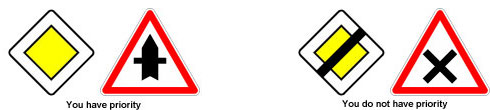
When driving in France, you may come across some main roads where you do not have right of way and you are required to give way to traffic approaching from the right. The following signs indicate who has priority:
In some towns and villages, the speed limit of 50kph/30mph is not signposted, instead the name of the town/village is displayed on a rectangular sign edged in red. This sign signifies that the speed limit is 50kph.
At the exit to the town/village, there will be a similar sign edged in black with a red line through the name. Once you have passed this sign, the speed limit increases to what it was before you arrived at the town/village.
Pedestrians have priority over vehicles when crossing a road. Pedestrians need to “show a clear intention to cross” described as “an ostensible step forward or a hand gesture”. The only exception to this rule is where there is a designated pedestrian crossing less than 50m away. Drivers who ignore this rule and do not stop for pedestrians waiting to cross the road can receive a fine of up to €135.
A solid white line down the centre of the road prohibits overtaking. In Spain, this line must not be crossed to execute a left turn, despite the lack of any other ‘no left turn’ sign. If necessary, proceed to a ‘cambio de sentido’ (change of direction) sign to turn.
Also in Spain, many roads have a single white line on the near (verge) side of the carriageway. This marks a narrow lane for pedestrians and/or cyclists and is not for use as a hard shoulder. A continuous line also indicates ‘no stopping’, even if it is possible to park entirely off the road. It should not be crossed except in a serious emergency.
Halt signs mean halt – on the spot fines are imposed on motorists creeping forward at these signs. When stopping at traffic lights, ensure that you stop soon enough so that you can still see the colour of the lights as they can be to the side or high overhead without a further set in front.
In Austria, it is now compulsory to have emergency corridors on all dual carriageways and motorways when there is congestion, this precautionary emergency corridor is created by drivers in the left-hand lane moving as far to the left as they can, and drivers in the right-hand lane moving as far over to the right as they can, leaving a clear path down the middle of the road for the emergency services. A similar system has also been introduced in Slovenia and also in the Czech Republic.
 The vast majority of overseas holidays pass without incident, however, very occasionally we receive reports from members who have been the victims of robberies or attempted robberies.
On the road
We would recommend that you always come off motorways to find overnight sites. Unfortunately, as you may have seen in the trade press including our own Club Magazine, it is becoming more and more of a problem that caravans and motorhomes parked overnight on service stations are targeted by thieves who are not deterred by the fact that people are asleep inside the vehicles.
Motorways provide convenient service stations and areas for a rest and a picnic en route but try not to leave the outfit unattended at any time and find a proper site for an overnight stop for your own safety.
Reported incidents
In Southern France, Spain, and Portugal the following “techniques” have been used to part members from their money/property:
Precautions
We do not want to discourage members from travelling and there are a few things you can do to reduce the chances of your holiday being disrupted:
If you notice that you have a flat tyre, make sure all your valuables are out of sight and secure before changing the tyre.
Finally, if you are a victim of this type of robbery or attempted robbery please report it by calling 112. If you are in Spain you can call 902 10 21 12 which is number is manned by English speaking staff who will take your statement in English, translate it, then fax/email it to the nearest police station. They will also advise you where the nearest police station is so you can go in and sign your statement.
Unfortunately, we occasionally receive reports of thefts on campsites abroad, even on those where there are security measures in place. We therefore recommend you take the following precautions:
Take a look at more useful information before travelling abroad in your caravan or motorhome
At 365 Camper Hire, we’re passionate about helping travellers like you experience the best of the UK, one road trip at a time. From Hampshire’s natural wonders to the UK’s most iconic landscapes, our campervans are your ticket to adventure, freedom, and unforgettable moments.
If you’re ready to explore the beauty of campervan travel, we’re here to make it simple, stress-free, and fun. Whether it’s a weekend getaway in Hampshire or an extended UK or Euro adventure, our team is ready to help you hit the road in style.
Book your campervan hire in Hampshire today and start planning the road trip of your dreams. Visit our website at 365CamperHire.co.uk to check availability and take the first step toward your next unforgettable journey. Your adventure awaits!
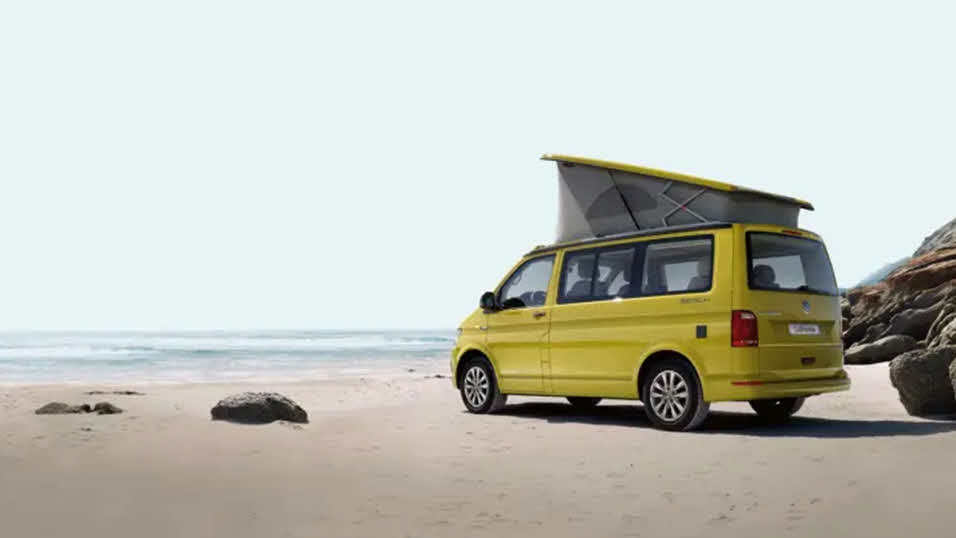
Before setting off on your first campervanning adventure, you’ll need to choose a campervan which is right for you. There are many types of campervan to choose from, so we suggest reading our handy campervan types guide to help you decide which you’d prefer.
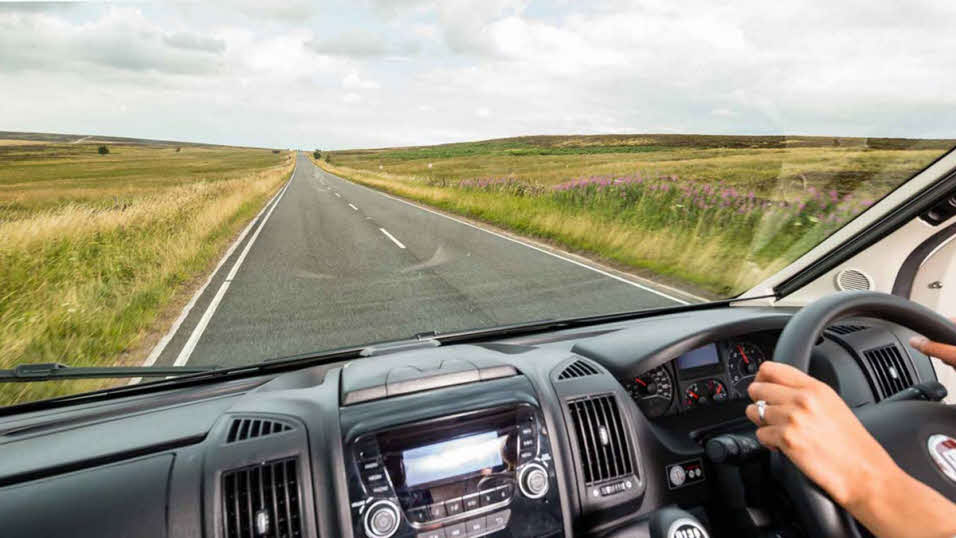
If you need a little more peace of mind before you purchase a ‘van, you can hire a campervan from 365camperhire with our Try Before You Buy scheme. We offer a couple of different makes of vans, and have access to other vehicles if required
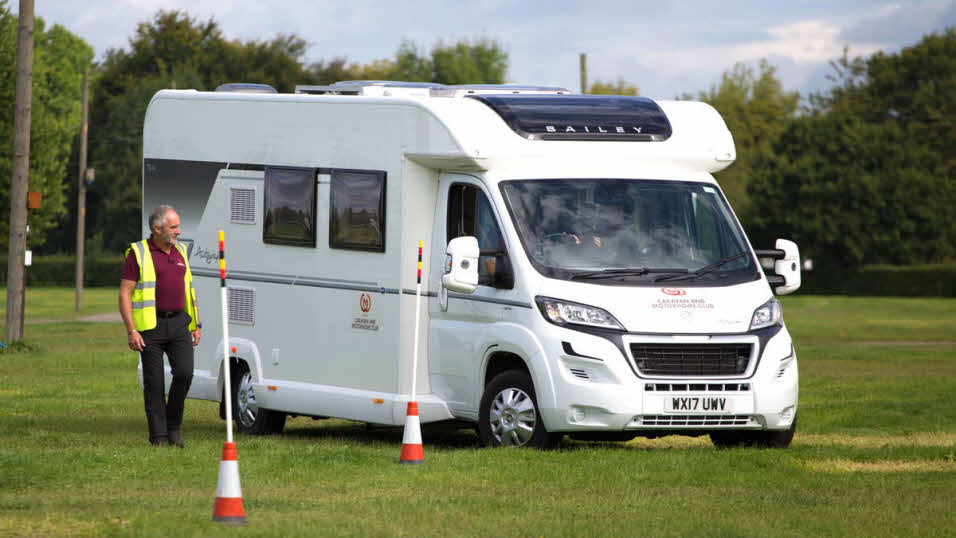
If you want to build up your confidence quickly, we recommend booking a session on the Camping and Caravanning Club’s motorhome manoeuvring course – these courses are ideal for beginners and suitable for campervanners.
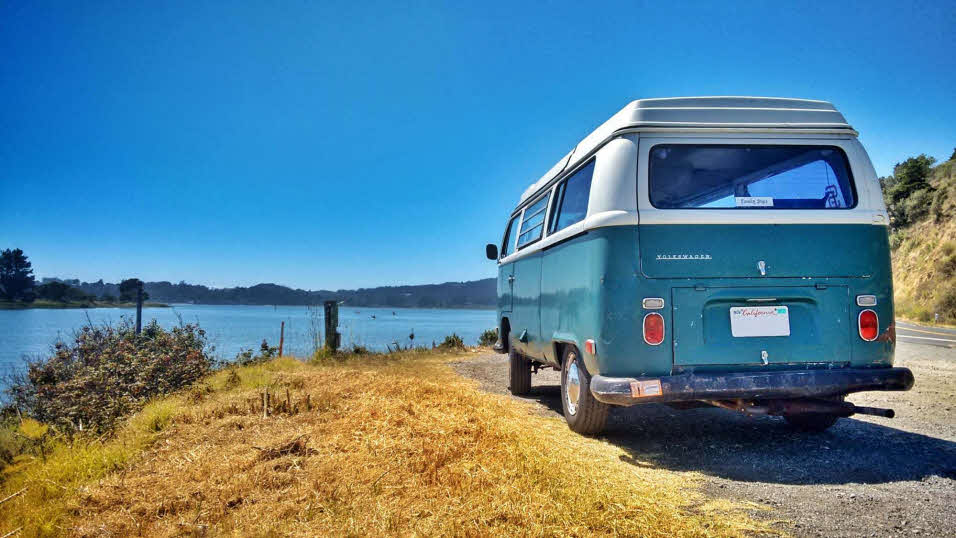
Make sure you have campervan insurance, breakdown cover and road lighting on your vehicle before you set off with your own van, of course all of this is included when you hire from 365camperhire.co.uk
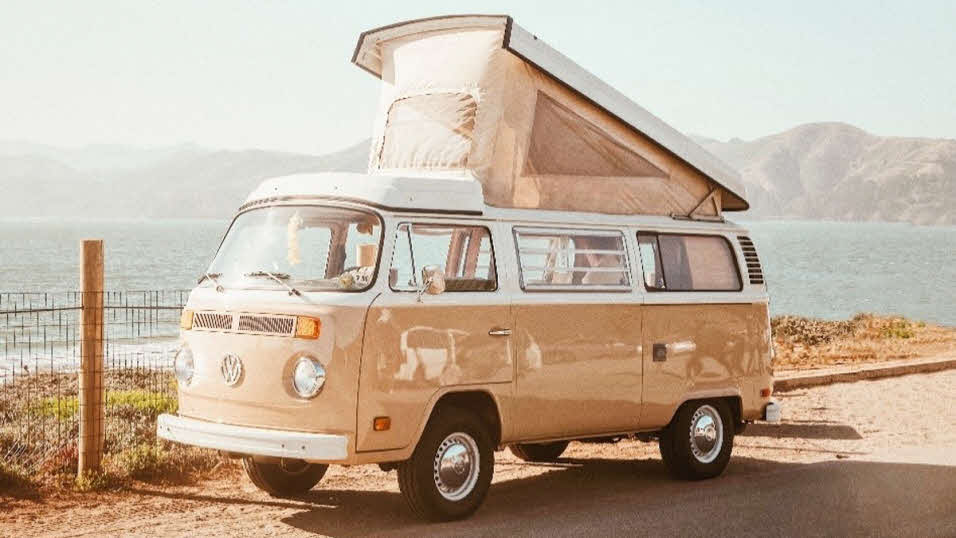
Once you’re all set for your journey, we suggest hopping out after about 20 minutes and double-checking that everything is still okay. Make sure all your belongings are still secured where you left them.
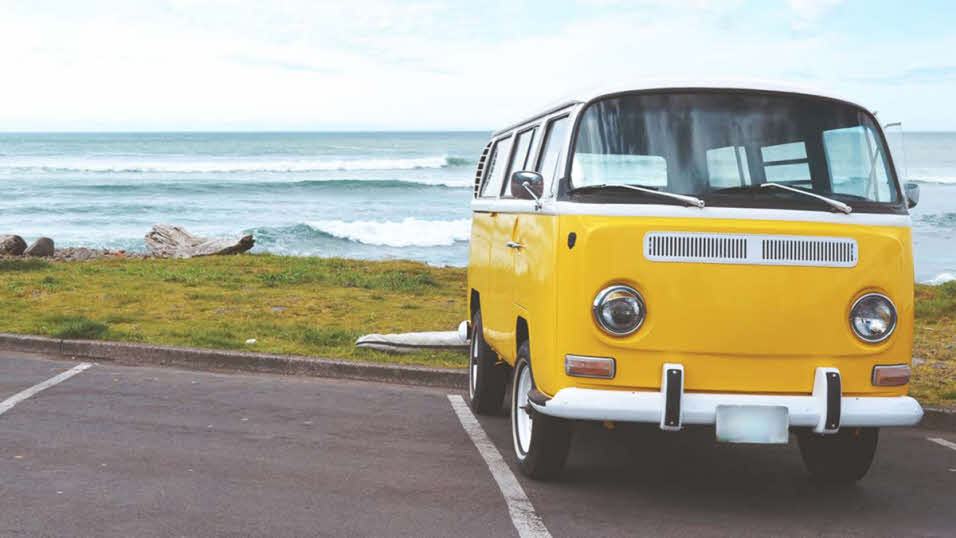
Driving abroad needn’t be more difficult than driving at home. Check out our first time abroad tips for newbies and our top tips for driving overseas.
Ready to Start Your Adventure?
At 365 Camper Hire, we’re passionate about helping travellers like you experience the best of the UK, one road trip at a time. From Hampshire’s natural wonders to the UK’s most iconic landscapes, our campervans are your ticket to adventure, freedom, and unforgettable moments.
If you’re ready to explore the beauty of campervan travel, we’re here to make it simple, stress-free, and fun. Whether it’s a weekend getaway in Hampshire or an extended UK or Euro adventure, our team is ready to help you hit the road in style.
Book your campervan hire in Hampshire today and start planning the road trip of your dreams. Visit our website at 365CamperHire.co.uk to check availability and take the first step toward your next unforgettable journey. Your adventure awaits!
Sun, sea and sand – what’s not to like about a holiday in Europe? At 365caperhire.co.uk we understand that taking your caravan or motorhome overseas for the first time can be daunting – which is why we’ve put together some helpful hints and tips for your trip.
Take a look at our travel tips, driving advice and steps to make your first time touring abroad easier.